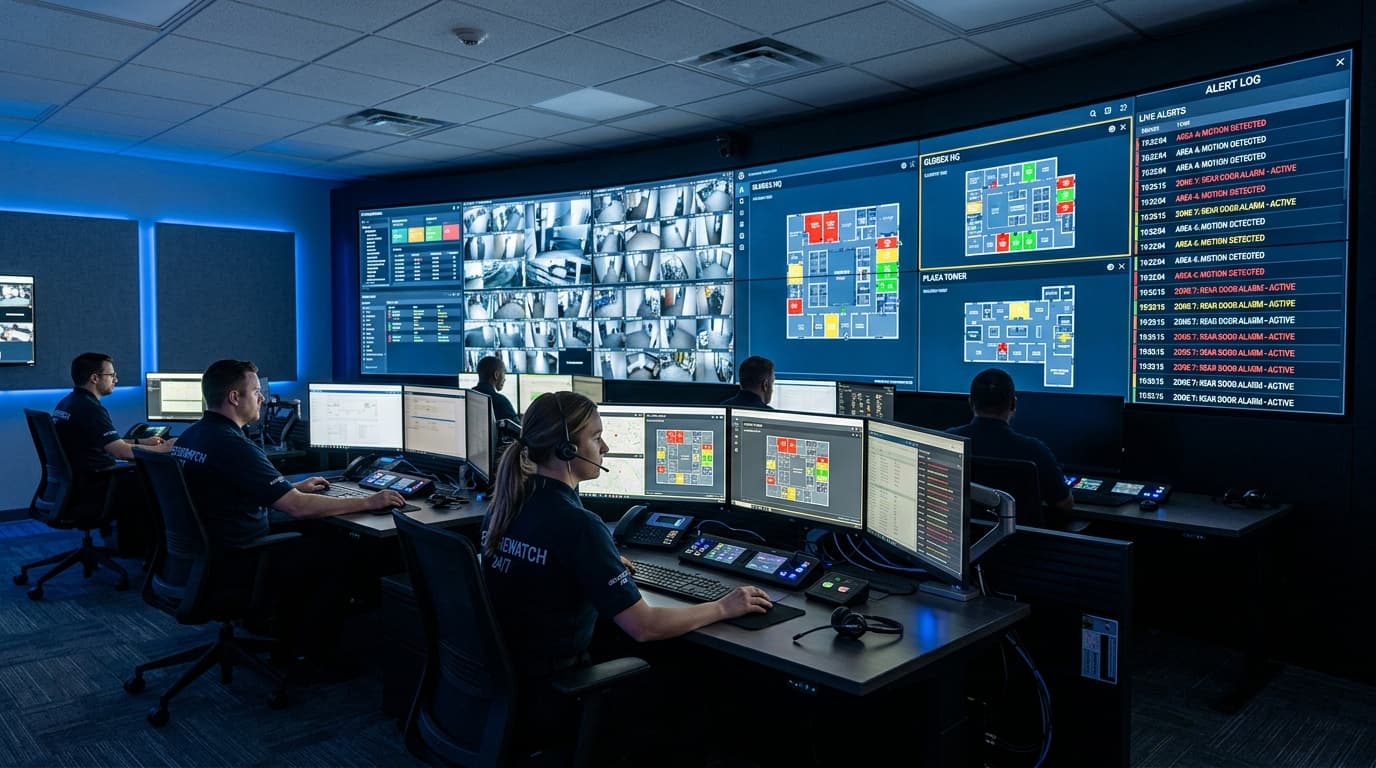
What Happens When Your Business Alarm Triggers? Alarm Monitoring Explained
Table of Contents
When a commercial intruder alarm or motion sensor triggers outside regular business hours, a rapid, structured response process begins. Understanding how 24/7 central station monitoring operates gives New Zealand business owners confidence that their physical premises, assets, and inventory remain protected around the clock.
Step 1: Signal Generation & Sensor Detection
Commercial intruder alarm systems utilize specialized field sensors — including passive infrared (PIR) motion detectors, door magnetic reed switches, glass-break sensors, and perimeter beam sensors. When an unauthorized movement or physical door opening occurs in an armed zone, the alarm control panel immediately registers an intrusion event.
Step 2: Instant Signal Transmission to Central Station
The alarm control panel sends an encrypted data signal via dual-path communication (IP internet and cellular network backup) to a 24/7 central monitoring station. Dual-path signaling ensures that even if local phone lines or internet cables are severed, alarm notifications reach operators in seconds.
Step 3: Operator Verification & Event Assessment
Upon receiving the alarm signal, trained monitoring station operators analyze the incoming event data within seconds:
- Single Zone Trigger: A single motion sensor activation may prompt immediate phone verification with designated client keyholders.
- Multiple Sequential Triggers: Multiple motion sensors activating in sequence (e.g., perimeter door followed by hallway PIR) signals an active intrusion, triggering immediate mobile patrol guard dispatch.
- Tamper or Duress Alarms: Instant high-priority dispatch protocols initiate without delay.
Step 4: Immediate Dispatch of Mobile Patrol Officers
Once verified, the monitoring station dispatches a nearby GPS-tracked mobile patrol security vehicle to the property. Atlas Security patrol officers are strategically positioned across Auckland, Hamilton, and Wellington to minimize arrival times.
Step 5: On-Site Physical Inspection & Building Securing
Upon arriving at your premises, the patrol officer conducts a thorough physical inspection:
- Inspects exterior perimeter doors, windows, and loading bay gates for signs of forced entry.
- If entry is detected, officer secures the perimeter and requests police backup while remaining on site.
- If the property is secure, officer resets the alarm panel (if keyholder access is authorized), re-arms the building, and submits an electronic incident report.
Common Causes of Commercial False Alarms and How to Prevent Them
Preventing Unnecessary Alarm Dispatches:
- Staff User Error: Ensure all employees entering after hours are trained on alarm arming/disarming PIN codes.
- Unserviced Backup Batteries: Replace aging alarm control box backup batteries every 2–3 years to prevent false triggers during power outages.
- Environmental Interference: Keep large promotional banners, hanging signs, and HVAC vents clear of motion sensor zones.
- Unlatched Windows: Ensure cleaning crews close and latch all exterior windows before arming the system at night.
Why Professional Alarm Monitoring Outperforms Self-Monitored Phone Apps
While self-monitored smartphone alarm apps allow owners to receive push notifications, they rely entirely on the owner being awake, attentive, and able to respond at 2:00 AM. In contrast, 24/7 central security alarm monitoring provides dedicated, uninterrupted operator oversight and reliable, protocol-driven mobile guard dispatch 365 days a year.
Frequently Asked Questions
Do I need to change my current alarm hardware to use Atlas Security monitoring?
In most cases, no. Our central monitoring station integrates seamlessly with standard IP and cellular commercial alarm panels used across New Zealand.
What happens if an alarm triggers while I am out of the country?
Our 24/7 monitoring team handles the entire response flow according to your pre-authorized post orders — dispatching mobile patrol officers to inspect the premises, securing the site, and notifying designated keyholders via email or phone.
Are all alarm response guards licensed in NZ?
Yes. All Atlas Security mobile patrol officers hold active Ministry of Justice Certificates of Approval (COA) under the Private Security Personnel and Private Investigators Act 2010.
Protect Your Property with 24/7 Alarm Monitoring
Ensure fast, reliable security guard dispatch when an intruder alarm triggers. Contact our 24/7 team to set up monitored security for your business.
Explore Alarm Monitoring ServicesNeed Professional Security for Your Site?
Atlas Security NZ delivers licensed static security guards, GPS-tracked mobile patrol units, and 24/7 alarm monitoring services across New Zealand.