How to Prevent Construction Site Theft in New Zealand (2026 Guide)
Table of Contents
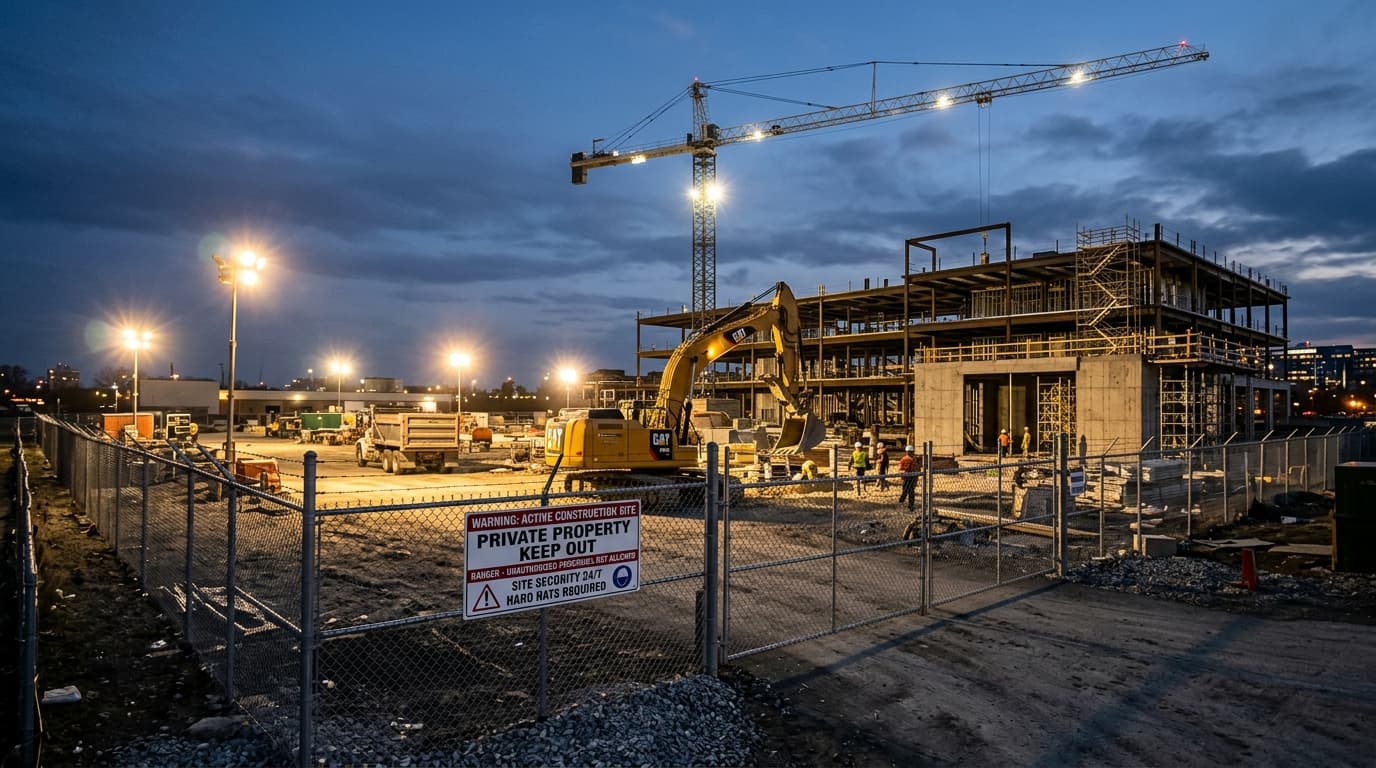
Civil building projects and commercial developments across New Zealand face persistent threats from theft, trespassing, and property damage. Unsecured construction sites contain exposed copper wiring, expensive power tools, building materials, and heavy machinery — making them prime targets for opportunistic crime after hours.
Why Construction Sites Are Vulnerable to Theft
Unlike established commercial buildings, construction developments are constantly evolving environments. Fencing boundaries shift daily, temporary lighting varies, and multiple contractor trades move on and off site throughout the week.
Key risk factors include:
- Unsecured High-Value Materials & Equipment: Bundles of copper cabling, structural timber, plumbing fittings, and roofing sheets stored in open yards.
- After-Hours Site Vacancy: Sites left unattended from 5:00 PM until 7:00 AM on weekdays and completely unstaffed over weekends and public holidays.
- Complex Site Perimeters & Contractor Access: Multiple temporary access gates, incomplete hoarding, unverified contractor access, and unlit blind spots along site boundaries in developing subdivisions across Auckland and Hamilton.
Security Planning by Construction Stage
Security requirements evolve through each phase of a development project:
- Phase 1 — Site Setup & Excavation: Perimeter hoarding installation, gate locking mechanisms, temporary security floodlighting, and heavy equipment immobilization.
- Phase 2 — Active Frame & Fit-Out: Contractor sign-in logs, copper cable and tool vault locking, night-time static guarding, and gate access management.
- Phase 3 — Completion & Handover: Appliance protection, final lock-up inspections, and frequent mobile patrol sweeps until tenant occupancy.
10-Point Construction Site Theft Prevention & Shutdown Checklist
Essential Security Measures & Site Shutdown Checklist for Site Managers:
- 1. Secure Perimeter Hoarding & Boundary Checks: Install 2.1m heavy-duty anti-climb mesh fencing with locked gates and perform daily perimeter checks.
- 2. Implement Gatehouse Visitor & Contractor Access Logging: Require all sub-contractors, delivery drivers, and visitors to sign in and present photo ID.
- 3. Equipment & Material Protection in Lockboxes: Store all handheld power tools, copper wiring, and fitting components inside heavy steel job-site storage vaults.
- 4. Immobilize Heavy Machinery & Plant Equipment: Remove ignition keys, lock cab doors, and lower excavator buckets flat to the ground.
- 5. Deploy Motion-Sensor Solar Floodlighting: Illuminate material staging bays and unlit site corners.
- 6. Engrave Company Identifiers & Asset Tags: Mark expensive equipment and power tools with permanent micro-dots or company logos.
- 7. Post Visible Warning Signage: Display clear "Warning: Licensed Security Guard & GPS Patrols on Site" notices on all gates.
- 8. Stage Deliveries Just-In-Time: Schedule copper cable and high-value appliance deliveries immediately prior to installation.
- 9. Deploy Static Guards After Hours: Station licensed COA security officers on site during evening, weekend, and holiday shutdown periods.
- 10. Execute Nightly Site Shutdown Checks: Perform randomized mobile patrol vehicle sweeps throughout non-operational hours.
How Security Guards Protect Construction Sites
Deploying licensed construction site security guards provides an active, physical deterrent that electronic alarms alone cannot match. Stationed guards perform active perimeter walks, check storage container locks, verify overnight delivery vehicles, manage contractor access, and clear trespassers before damage occurs.
For large-scale commercial developments, on-site static security guards manage gate access during working shifts and maintain continuous surveillance throughout non-operational hours.
How Mobile Patrols Support Civil & Building Sites
For medium-sized building sites or civil works with limited after-hours activity, GPS-tracked mobile security patrols provide a flexible, cost-effective defense. Mobile patrol officers arrive in marked security vehicles at unpredictable times, inspect perimeter fencing, check site hoists, and verify that temporary sheds remain secured. Review our Static Guards vs Mobile Patrols Guide for detailed comparison advice.
Frequently Asked Questions
Can security guards handle sub-contractor inductions and site access?
Yes. Atlas Security static guards are trained to manage gate access control, verify visitor credentials, conduct safety inductions, and maintain accurate sign-in registries for civil and commercial build sites.
What regions do you service for construction security?
We provide construction site security guards and mobile patrol coverage across Greater Auckland, Hamilton, Waikato, and the Wellington metropolitan region.
How quickly can temporary security guarding be deployed to a new building site?
We can deploy licensed COA security guards to temporary or new construction sites within 24 to 48 hours of completing a site security risk evaluation.
Protect Your Building Site From Costly Theft
Prevent material loss and project delays. Speak with our civil security specialists for a customized construction protection plan.
Request Construction QuoteNeed Professional Security for Your Site?
Atlas Security NZ delivers licensed static security guards, GPS-tracked mobile patrol units, and 24/7 alarm monitoring services across New Zealand.